Skip to content
TutorMyself Chemistry Logo
  • Topics
    • Year 9
      • Fundamentals
      • Ionic Bonding
      • Key Reactions
      • Simple Molecules & Covalent Bonding
      • Alkanes & Crude Oil
    • Year 10
      • Calculations
      • Kinetics
      • Alkenes & Polymers
      • Metal reactivity & Halogens
      • Moles
      • Energetics
      • Acids & Salts
      • Structure & Bonding
    • Year 11
      • Electrolysis
      • Alcohols & Carboxylic Acids
      • Equilibria
      • Condensation Polymers
      • Key Calculations
      • Specification experiments
  • Spec lists
    • Full Spec Points
    • Spec (double only)
    • Spec (single only)
    • New for 2019 exam
    • Year 9 Spec Points
    • Year 10 Spec Points
    • Year 9&10 Spec Points
    • Year 9&10 double only
    • Physics
      • Full Spec Points
      • Spec (double only)
      • Spec (single only)
  • Spec sections
    • 1 Chemistry Principles
      • (a) States of matter
      • (b) Elements, compounds and mixtures
      • (c) Atomic structure
      • (d) The Periodic Table
      • (e) Chemical formulae, equations and calculations
      • (f) Ionic bonding
      • (g) Covalent bonding
      • (h) Metallic bonding
      • (i) Electrolysis
    • 2 Inorganic chemistry
      • (a) Group 1 (alkali metals) – lithium, sodium and potassium
      • (b) Group 7 (halogens) – chlorine, bromine and iodine
      • (c) Gases in the atmosphere
      • (d) Reactivity series
      • (e) Extraction and uses of metals
      • (f) Acids, alkalis and titrations
      • (g) Acids, bases and salt preparations
      • (h) Chemical tests
    • 3 Physical chemistry
      • (a) Energetics
      • (b) Rates of reaction
      • (c) Reversible reactions and equilibria
    • 4 Organic chemistry
      • (a) Introduction
      • (b) Crude oil
      • (c) Alkanes
      • (d) Alkenes
      • (e) Alcohols
      • (f) Carboxylic acids
      • (g) Esters
      • (h) Synthetic polymers
  • testMyself
    • Flashcards
    • Quizzes
    • Q&A slides
    • Past Papers
    • Calculations practice
  • Links
    • Videos
    • Periodic table
    • Cryptic Crossword
    • Edexcel site
    • Links
    • Teaching
    • Simulations
    • Physics
      • Edexcel iGCSE Physics
        • 1 Forces and motion
          • 1(a) Units
          • (b) movement and position
          • (c) forces, movement, shape and momentum
        • 2 Electricity
          • 2(a) Units
          • (b) Mains electricity
          • (c) Energy and voltage in circuits
          • (d) Electric charge
        • 3 Waves
          • 3(a) Units
          • (b) Properties of waves
          • (c) The electromagnetic spectrum
          • (d) Light and sound
        • 4 Energy resources and energy transfers
          • 4(a) Units
          • (b) Energy transfers
          • (c) Work and power
          • (d) Energy resources and electricity generation
        • 5 Solids, liquids and gasses
          • 5(a) Units
          • (b) Density and pressure
          • (c) Change of state
          • (d) Ideal gas molecules
        • 6 Magnetism and electromagnetism
          • 6(a) Units
          • (b) Magnetism
          • (c) Electromagnetism
          • (d) Electromagnetic induction
        • 7 Radioactivity and particles
          • 7(a) Units
          • (b) Radioactivity
          • (c) Fission and fusion
        • 8 Astrophysics
          • 8(a) Units
          • (b) Motion in the universe
          • (c) Stellar evolution
          • (d) Cosmology
      • Physics topics
        • Year 9
          • Topic: Fundamentals of Forces
          • Topic: Fundamentals of Waves
          • Topic: Electromagnetic Spectrum
          • Topic: Pressure and Density
          • Topic: Fundamentals of Energy
          • Topic: Motion in the Universe
          • Topic: Fundamentals of Circuits
          • Topic: Movement and Position
        • Year 10
          • Topic: Light
          • Topic: Ideal Gas Laws
          • Topic: Radioactivity
          • Topic: Mains Electricity
          • Topic: Moments and Momentum
        • Year 11
          • Topic: Challenging Forces
          • Topic: Challenging Waves
          • Topic: Specific Heat Capacity
          • Topic: Fission and Fusion
          • Topic: Cosmology
          • Topic: Challenging Astrophysics
          • Topic: Magnetism and Electromagnetism
          • Topic: Electromagnetic Induction

4.18 describe the energy transfers involved in generating electricity using: wind, water, geothermal resources, solar heating systems, solar cells, fossil fuels, nuclear power

Previous Next

4.18 describe the energy transfers involved in generating electricity using: wind, water, geothermal resources, solar heating systems, solar cells, fossil fuels, nuclear power
Related Posts:

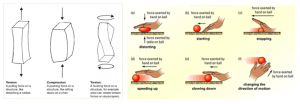
  • shape changing
    1.11 describe the effects of forces between bodies such as changes in speed, shape or direction
  • 1.20 describe the factors affecting vehicle stopping distance, including speed, mass, road…
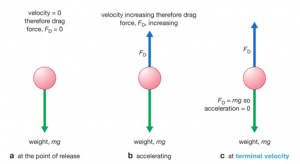
  • terminal velocity
    1.21 describe the forces acting on falling objects (explain why falling objects reach a…
  • 1.24 describe elastic behaviour as the ability of a material to recover its original shape…
  • 2.03 understand why a current in a resistor results in the electral transfer of energy and…
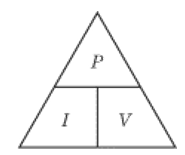
  • power triangle
    2.04 know and use the relationship between power, current and voltage: and apply the…
stuart2019-06-27T10:45:36+00:00Categories: (d) Energy resources and electricity generation, 4 Energy resources and energy transfers, Edexcel iGCSE Physics, Uncategorized|Tags: GCSE, GCSE_Physics_SpecPoint, Physics, Todd|

Share This Story, Choose Your Platform!

FacebookXRedditLinkedInTumblrPinterestVkEmail

Past paper questions on spec point:

SpecQ'stionAnsMS

tutorMyself Chemistry is a non-commercial tool to support learning for Edexcel iGCSE Chemistry at one of Britain's top public schools.
Toggle Sliding Bar Area
Select a set of flashcards to study:

     Terminology

     Skills and equipment

     Remove Flashcards

Section 1: Principles of chemistry

      a) States of matter

      b) Atoms

      c) Atomic structure

     d) Relative formula masses and molar volumes of gases

     e) Chemical formulae and chemical equations

     f) Ionic compounds

     g) Covalent substances

     h) Metallic crystals

     i) Electrolysis

 Section 2: Chemistry of the elements

     a) The Periodic Table

     b) Group 1 elements: lithium, sodium and potassium

     c) Group 7 elements: chlorine, bromine and iodine

     d) Oxygen and oxides

     e) Hydrogen and water

     f) Reactivity series

     g) Tests for ions and gases

Section 3: Organic chemistry

     a) Introduction

     b) Alkanes

     c) Alkenes

     d) Ethanol

Section 4: Physical chemistry

     a) Acids, alkalis and salts

     b) Energetics

     c) Rates of reaction

     d) Equilibria

Section 5: Chemistry in industry

     a) Extraction and uses of metals

     b) Crude oil

     c) Synthetic polymers

     d) The industrial manufacture of chemicals

Page load link
Go to Top