4.17 use the relationship between power, work done (energy transferred) and time taken:
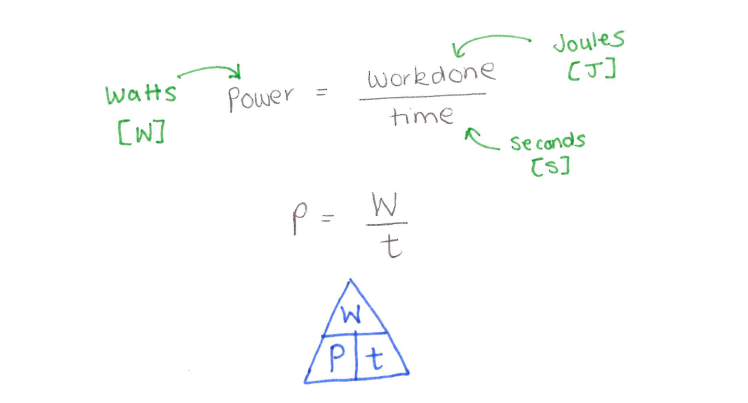

power is the rate of transfer of energy, or the rate of work done. so p = E/t
|
Work done = energy transferred |
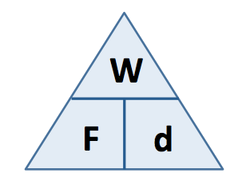
Work Done (J) = Force (N) x distance moved (m)
In any process energy is never created or destroyed. (It is just transferred from one store to another.)
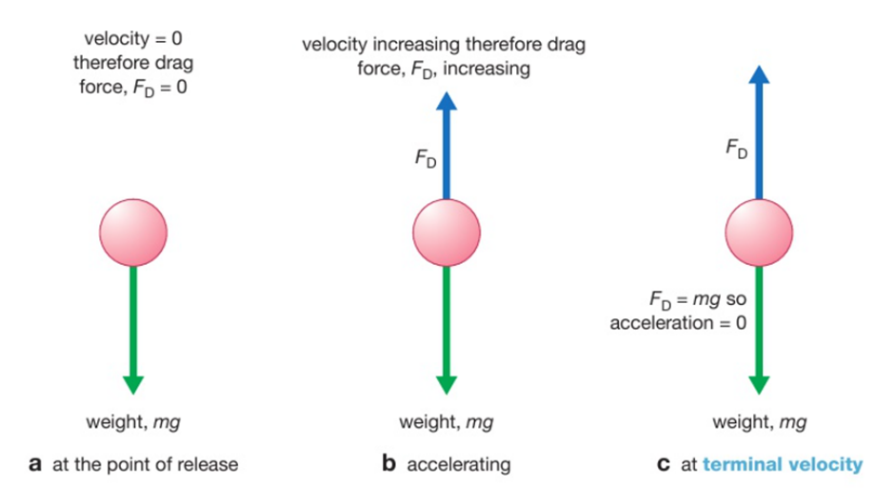
Initially the only force is weight as drag is proportional to velocity. So the object accelerates downwards. As it accelerates the velocity so the drag increases as well. meaning there is a smaller resultant force downwards so a smaller acceleration. Until the object reaches a speed where the drag is equal to the weight meaning there is no acceleration, this velocity is know as terminal velocity.
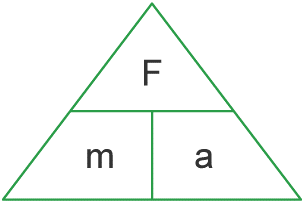
Force = Mass x Acceleration.
the force refers to the resultant force or the combined forces as seen in 1.15
Force has a magnitude measured in (N) but it also has a direction, a push or a pull, up, down, left or right. So force is a vector.
scalars are quantities with only magnitude (size)
vectors are quantities with magnitude (size) and direction
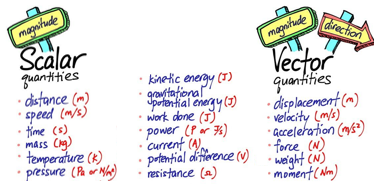
different types of forces include:
Gravitational, weight, friction, electrostatic, air resistance (drag), tension (force in a spring), up thrust, lift, thrust
Forces can act on a body to change the velocity, so the speed, direction or both.
Or forces can change the shape of a body, stretching it squishing it or twisting it.
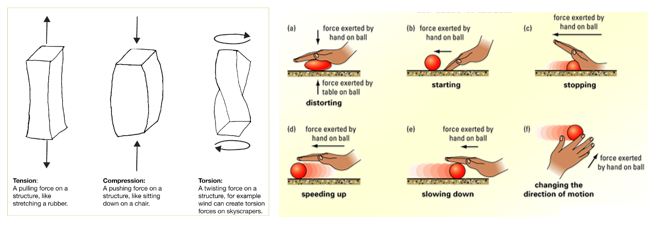
Make sure you are familiar with units for
Mass: kilogram (kg)
Distance: metre (m)
Speed: metre per second (m/s)
Acceleration: metre per second squared (m/s^2)
Force: newton (N)
Time: second (s)
Gravity: newton/kilogram (N/kg)