The entire quiz question bank (Double only)!
This quiz pulls questions at random from the entire Double-only question-bank
This interactive quiz is no longer available. The topic notes and past-paper questions remain available.


This quiz pulls questions at random from the entire Double-only question-bank
This interactive quiz is no longer available. The topic notes and past-paper questions remain available.
This video shows the addition reaction between bromine and an alkene.
The observation from the reaction is the colour change from orange to colourless.
This interactive quiz is no longer available. The topic notes and past-paper questions remain available.
This interactive quiz is no longer available. The topic notes and past-paper questions remain available.
This interactive quiz is no longer available. The topic notes and past-paper questions remain available.
This quiz pulls questions at random from the entire 1100+ question-bank
This interactive quiz is no longer available. The topic notes and past-paper questions remain available.
This interactive quiz is no longer available. The topic notes and past-paper questions remain available.
This interactive quiz is no longer available. The topic notes and past-paper questions remain available.
This interactive quiz is no longer available. The topic notes and past-paper questions remain available.
This interactive quiz is no longer available. The topic notes and past-paper questions remain available.
This interactive quiz is no longer available. The topic notes and past-paper questions remain available.
This interactive quiz is no longer available. The topic notes and past-paper questions remain available.
This interactive quiz is no longer available. The topic notes and past-paper questions remain available.
This interactive quiz is no longer available. The topic notes and past-paper questions remain available.
This interactive quiz is no longer available. The topic notes and past-paper questions remain available.
This interactive quiz is no longer available. The topic notes and past-paper questions remain available.
This interactive quiz is no longer available. The topic notes and past-paper questions remain available.
This interactive quiz is no longer available. The topic notes and past-paper questions remain available.
This interactive quiz is no longer available. The topic notes and past-paper questions remain available.
This interactive quiz is no longer available. The topic notes and past-paper questions remain available.
This interactive quiz is no longer available. The topic notes and past-paper questions remain available.
This interactive quiz is no longer available. The topic notes and past-paper questions remain available.
This interactive quiz is no longer available. The topic notes and past-paper questions remain available.
This interactive quiz is no longer available. The topic notes and past-paper questions remain available.
Refresh the page to get a different random selection of questions and answers.
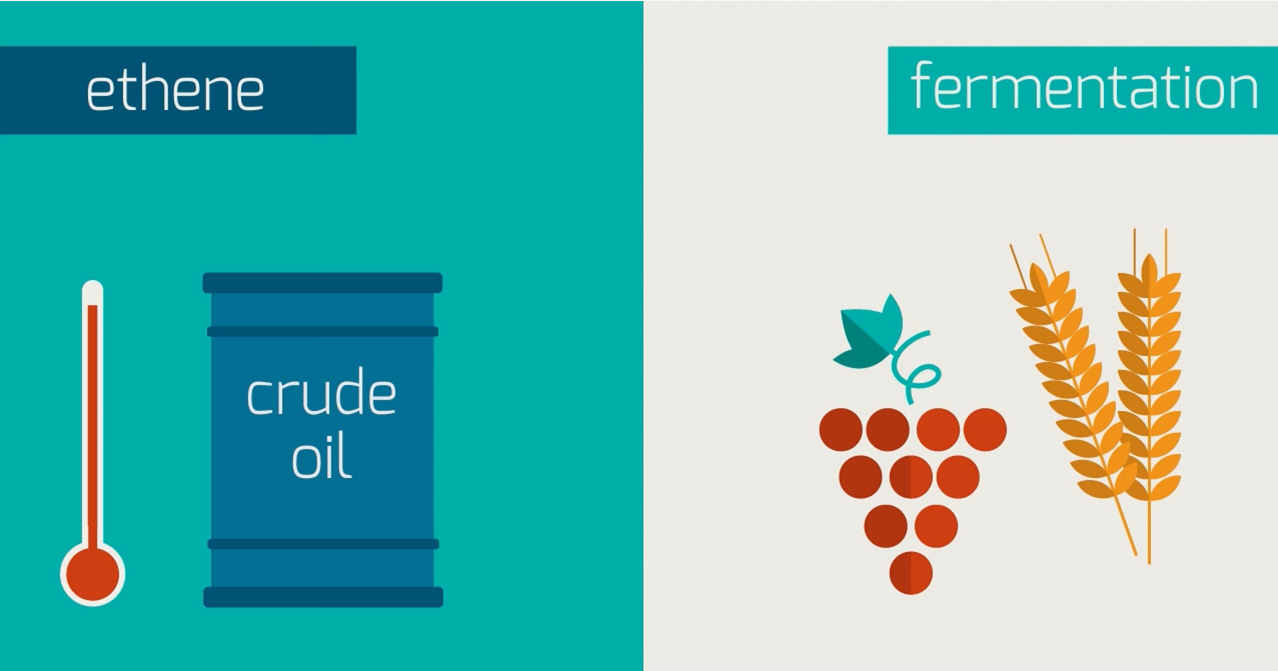
Here’s a great video which shows the 2 ways to make ethanol.
Test for hydrogen gas (H2)
Test for carbon dioxide (CO2)
|
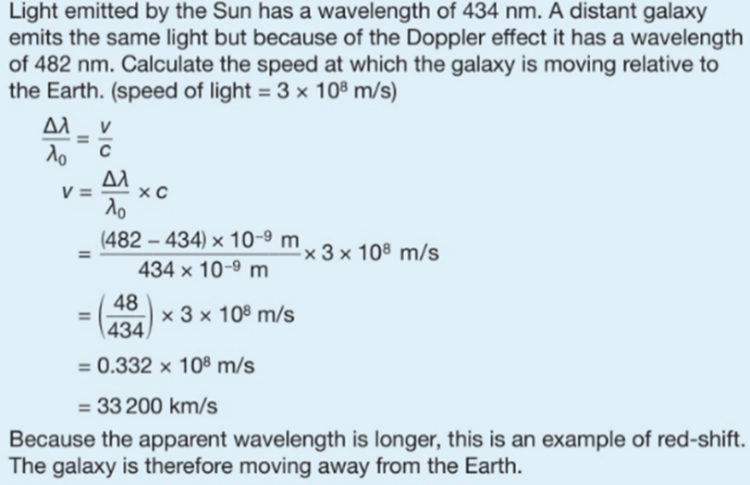
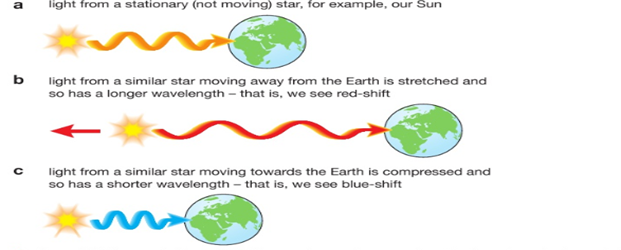
If we examine the light spectra for distant galaxies we can see that the wavelengths of the light have become longer. We call this stretching of the waves ‘red-shift’. It tells us that the galaxies producing the light are moving away from us .The further away a galaxy is, the greater its red-shift, so it is moving even faster. This is evidence that the Universe is expanding and so it supports the Big Bang Theory.
Microwave radiation can be detected EVERYWHERE in the Universe. These are the stretched remains of high energy gamma radiation that would have been produced in the explosion that created the Universe. They have stretched because the Universe is expanding. |
|
1. Set up your apparatus as shown in the diagram using a rectangular block. 2. Shine the light ray through the glass block 3. Use crosses to mark the path of the ray. 4. Join up crosses with a ruler 5. Draw on a normal where the ray enters the glass block 6. Measure the angle of incidence and the angle of refraction and add these to your results table 7. Calculate the refractive 8. Repeat steps 2 – 7 using 9. Find an average of your
|
|
1. Set up your apparatus as shown in the diagram using a rectangular block. 2. Shine the light ray through the glass block 3. Use crosses to mark the path of the ray. 4. Join up crosses with a ruler 5. Draw on a normal where the ray enters the glass block 6. Measure the angle of incidence and the angle of refraction and add these to your results table 7. Comment on how the speed of the light has changed as the light moves between the mediums. 8. Repeat this for different angles of incidence and different glass prisms. |
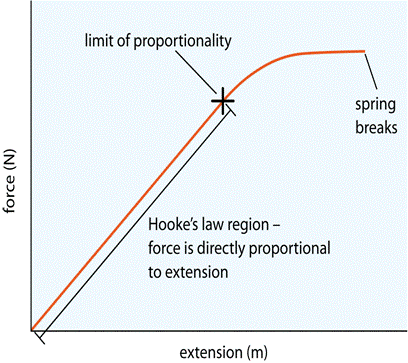
More distant galaxies have greater red-shift and therefore are receding faster because the space between all galaxies is stretching as the universe expands.
|
This is called the Doppler Effect. If something that emits a wave moves whilst it is doing so (imagine a noisy motorbike coming towards you then going further away, emitting sound waves the whole time) then the wavelength of the sound will become shorter as it is moving towards you, increasing the frequency, and stretched as it is moving away, decreasing the frequency.
You will hear this as a change in pitch, getting higher as it approaches and lower as it moves away. The same thing happens for a moving object that is emitting light waves –e.g. a galaxy. |
Scientists believe that about 14 billion years ago all matter in the Universe was in one extremely tiny and dense place. It then suddenly exploded, and has been expanding ever since. This expansion is shown by the red-shift of galaxies and the energy of the explosion can be seen everywhere in the Universe as the CMBR.
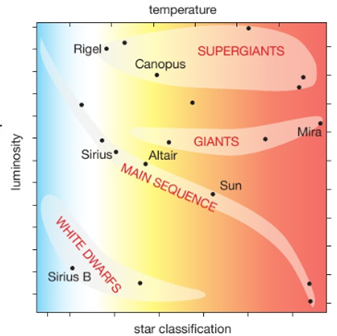
This diagram shows the relationship between a star’s luminosity (its brightness or power output) and its surface temperature. A star moves to different positions in the diagram during its life, as its internal structure and temperature change.
Important Note: the temperature scale is reversed. It is hotter towards the origin of the x axis.
Apparent magnitude is simply how bright a star appears in the night sky.
But, the brightness of a star depends on its distance from Earth and its luminosity – how much power it produces. (A dim star could just be very far away, or very close but not very luminous).
Absolute magnitude enables us to compare the brightness of stars because it is a measure of how bright they would appear if they were all the same distance from the Earth. – 32.6 light years.
After the stable period, a giant star expands into red supergiant. (It produces all the elements up to iron during nuclear fusion). When it finally runs out of nuclei to fuse it collapses due to the gravitational force, and then explodes – an exploding star is called a supernova.
The explosion throws dust and gas back into space and so another nebula is formed. A dense core remains – called a neutron star, because it is made entirely from neutrons. If its mass is large enough it can compress further to become a black hole. (Their gravity is so strong that not even light can escape!)
|
• nebula Stars form from large clouds of dust and gas particles (nebulae) that are drawn together by gravitational forces over millions of years. As the particles get closer the temperature and pressure becomes so large that nuclear fusion of hydrogen nuclei to helium nuclei occurs. This releases enormous amounts of energy in the form of heat and light.
• star (main sequence) Fusion produces forces that make the star expand outwards, but gravitational force is always pulling the particles within the star inwards. When these two opposing forces become balanced a star is stable and called a main sequence star. It should stay this way for millions of years, at a constant size and temperature.
• red giant Eventually hydrogen fusion stops as the star runs out of fuel. Gravitational force is now bigger than the outward fusion force which causes the star to collapse inwards and compress. This causes it to heat up to even higher temperatures so that fusion of helium nuclei begins. The increased power output causes the star to expand greatly. The surface area is so large that it is cooler than before, so its colour changes to red and the star is called a red giant.
• white dwarf Eventually fusion stops when the star runs out of helium nuclei and the gravitational force causes the star to collapse inwards and compress again. This heats it up so it changes colour to emit white light. The star is squashed so greatly by the gravitational force to become a small and very dense white dwarf. (They are so dense that a teaspoon full would weigh more than a cruise liner). A white dwarf eventually cools down and change colour as it does so, eventually becoming black. |
|
Stars are classified into 7 groups according to their colours (which is due to their surface temperature); O,B,A,F,G,K,M O are hottest (> 33 000 K and blue), M are coolest (2000 – 3700K and red) |